The businesses that dominate the next decade won't necessarily have the biggest advertising budgets. They'll be the easiest businesses for customers — and AI — to discover.
That's a bigger shift than it sounds like. For twenty years, discoverability meant search engine rankings and ad spend. Over the next five years, it will increasingly mean something else: whether AI assistants, recommendation engines, and local discovery systems trust your business enough to put it in front of a customer who never typed your name.
How Customer Behavior Is Changing
Customers are already searching differently than they did three years ago. Instead of typing a few keywords into Google and clicking through five results, more people are asking a direct question to an AI assistant and acting on whatever answer comes back. Fewer clicks. Fewer comparisons. More trust placed in a single synthesized recommendation.
This isn't a niche habit — it's becoming the default for a meaningful share of local and service-based searches. And it changes the entire game. The customer isn't browsing your competitors anymore. They're trusting an AI to have already done that browsing for them.
Search Engines vs AI Assistants
Search engines and AI assistants solve the same problem in fundamentally different ways. A search engine hands the customer a list and lets them decide. An AI assistant makes a decision on the customer's behalf and presents one answer, sometimes with a short list of alternatives.
That means search engines reward visibility — show up, get clicked, compete on the page. AI assistants reward trust — be confidently, verifiably the right answer, or don't get mentioned at all. Over the next five years, expect AI assistants to handle a growing share of discovery queries, with traditional search results increasingly serving as the fallback for research-heavy purchases rather than the primary discovery channel.
The Rise of Recommendation Engines
The next five years will blur the line between "search" and "recommendation." AI assistants are already starting to behave less like search tools and more like a knowledgeable friend who already knows your preferences — suggesting a contractor, a restaurant, or a service provider based on context, not just a typed query.
This favors businesses with a clear, well-documented identity over businesses that simply rank well. A recommendation engine needs confidence before it puts your name in front of a customer. That confidence comes from consistent, verifiable information — not from keyword density or ad spend.
Local Discovery and Reputation Signals
Local discovery is being reshaped by the same forces. Google Business Profile, local citations, and reviews have mattered for years — but they're becoming more important, not less, because AI assistants lean heavily on exactly these signals to evaluate local businesses.
The businesses winning local discovery five years from now will be the ones with complete, current, consistent local listings, a steady stream of recent reviews, and a clear presence in the directories and local sources AI systems already trust. A profile claimed once in 2022 and never touched again is a liability, not an asset.
Structured Data and Digital Authority
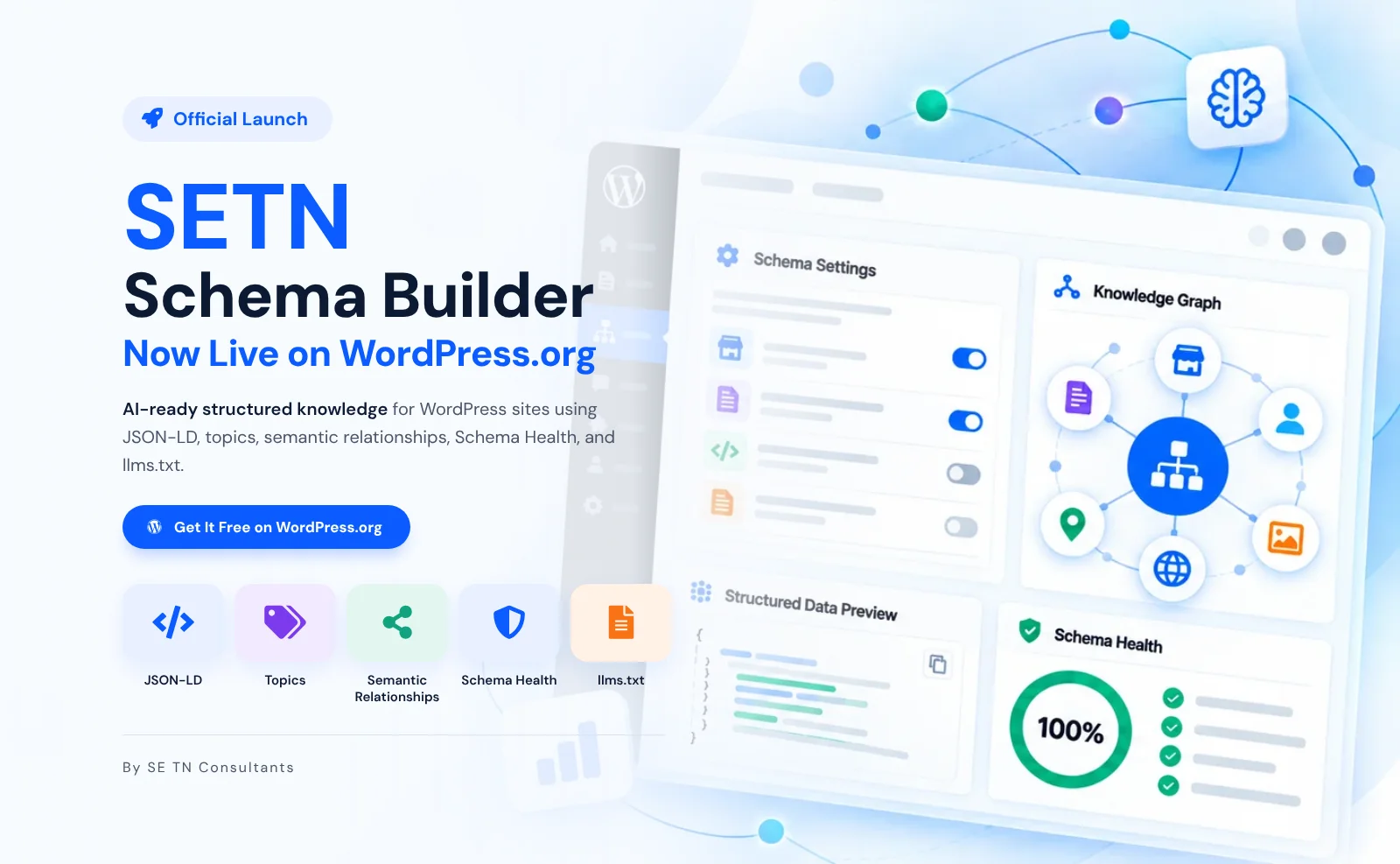
Behind the scenes, structured data is becoming the connective tissue of digital discoverability. Schema markup, knowledge graph presence, and consistent business facts across the web are what let AI systems confidently understand — and recommend — a business, rather than guessing from unstructured text.
Digital authority works alongside this: mentions, citations, and reviews on sources AI systems already trust carry more weight than ever. Five years from now, a business without structured data and third-party validation will be functionally invisible to AI-driven discovery, regardless of how good the business actually is.
Building a Future-Proof Digital Presence
A future-proof digital presence rests on a few durable principles, not a single tactic:
- Consistency — identical business facts everywhere they appear, not five slightly different versions
- Structure — schema markup and clean technical foundations that machines can read confidently
- Authority — third-party validation through reviews, citations, and trusted mentions
- Specificity — content that directly answers real customer questions instead of vague brand language
- Adaptability — a willingness to revisit and update digital presence regularly, not once and forget it
None of these are exotic. They're disciplined execution of fundamentals that most businesses have neglected for years — which is exactly why they're a competitive advantage right now.
What Business Owners Should Do Today
- Audit your current digital footprint. Check business information consistency across your website, Google Business Profile, and directories.
- Implement structured data now, while most competitors still haven't.
- Strengthen your review and reputation signals across the platforms that matter most to your industry.
- Test your own discoverability. Ask ChatGPT, Gemini, and Perplexity the questions a prospective customer would ask, and see what comes back.
- Build a quarterly review habit. The businesses that win the next five years will be the ones that keep adapting, not the ones that fix this once and move on.
The next five years won't reward the loudest businesses. They'll reward the clearest, most consistent, most trustworthy ones — the businesses that made themselves easy for both customers and AI to find, understand, and recommend.